


Artificial intelligence is no longer just a future concept for digital forensics, cybercrime, law enforcement, and crimes-against-children investigations. It is already being discussed, tested, and integrated into real workflows.
AI is being used, or at least seriously evaluated, for image and video review, media classification, transcription, translation, pattern recognition, triage, lead generation, document review, and large-scale evidence processing. In many ways, this is a natural evolution. Investigators and forensic examiners are dealing with more data than ever before, and the volume is not slowing down.
The conversation around AI usually starts with software.
Which tool should we use? What model is best? Can it help us find relevant evidence faster? Can it classify images? Can it summarize documents? Can it assist with triage? Can it help an investigator get to the important material sooner?
Those are all valid questions.
But there is another question that is not being asked enough:
Do we have the hardware to run AI properly, securely, and locally?
AI is not just a software issue
One of the recurring themes I have seen in discussions around AI adoption is that agencies and organizations are interested in AI, but many still face very practical barriers.
- Limited budgets.
- Limited personnel.
- Limited technical expertise.
- Lack of access to proper hardware.
- Concerns about privacy, risk, and responsible use.
That last piece is important.
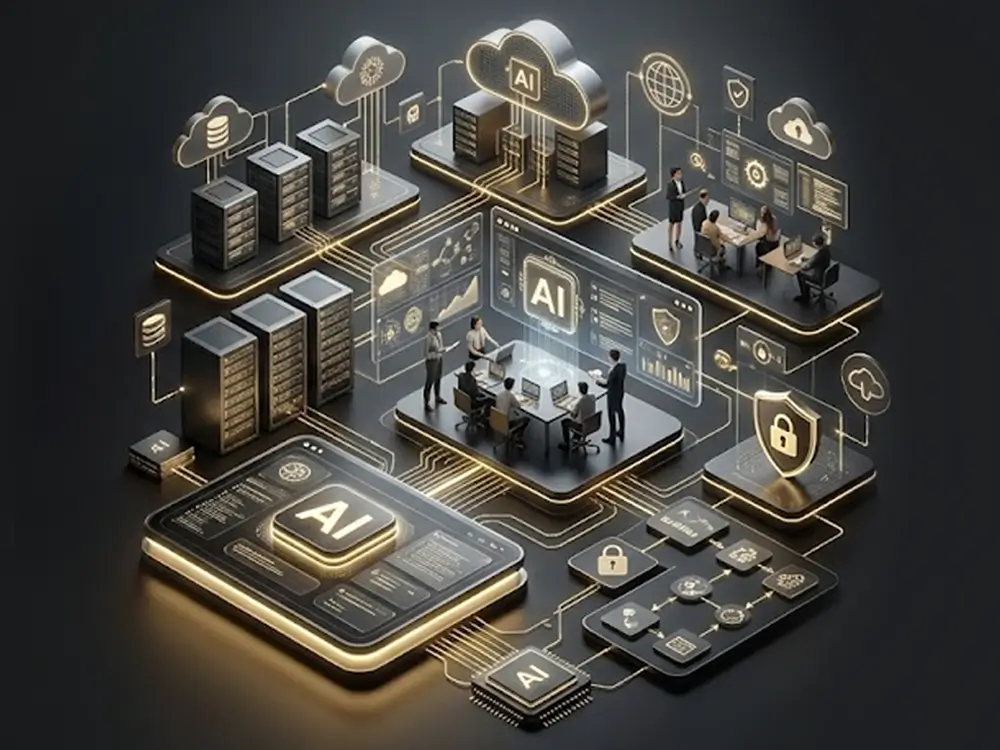
WAI tools may be powerful, but they do not run in a vacuum. They need infrastructure. They need processing power. They need storage. They need memory. They need GPUs. They need cooling. They need secure workflows. They need people who understand how to deploy and support them. In sensitive investigative environments, this becomes even more important.
A law enforcement agency, forensic lab, military unit, corporate security team, or ICAC task force may not be able to send sensitive evidence to a cloud-based AI service. They may be dealing with CSAM, victim material, classified information, corporate intellectual property, active criminal investigations, or other protected data.
In those environments, local and offline AI capability is not just convenient. It may be necessary.
The hardware conversation is behind the software conversation
Right now, many organizations are trying to understand what AI can do for them. That is understandable. The software side is exciting and moving quickl
But in my opinion, the hardware conversation is lagging behind.
Running local AI models is not the same as installing a normal forensic tool on a standard workstation. Depending on the workload, agencies may need high-performance GPUs, significant RAM, fast NVMe storage, larger evidence drives, proper thermal design, expandability, and systems that are built with long-term growth in mind.
A workstation that was excellent for traditional forensic processing a few years ago may not be ready for modern AI workloads.
That does not mean every agency needs a massive AI server or an expensive data center. In fact, that is part of the point. There is a practical middle ground between cloud-based AI and building a full AI data center. That middle ground is a purpose-built, locally controlled AI workstation.
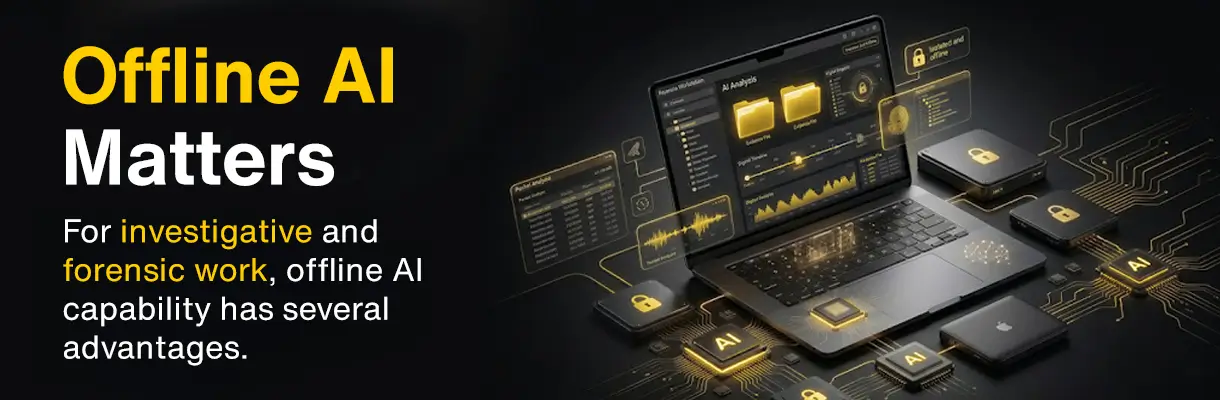
Offline AI matters
For investigative and forensic work, offline AI capability has several advantages.
- It can help keep sensitive evidence under agency control.
- It can reduce reliance on cloud services.
- It can support environments with limited or restricted internet access.
- It can help preserve privacy and chain-of-custody concerns.
- It can allow agencies to test, validate, and control models before using them in casework.
- It can provide a more defensible foundation for sensitive workflows.
This does not mean AI output should be blindly trusted. It should not.
AI should be treated as an investigative aid, not an investigator. It can help prioritize, classify, summarize, and identify possible leads, but the examiner or investigator still needs to validate the results, understand the limitations, and document the workflow.
That is no different than how we should treat any forensic tool. The tool can help us get there faster, but the human being remains responsible for the interpretation, validation, and reporting.
Where companies like SUMURI come in
This is where companies like SUMURI, and specifically our TALINO team, can play an important role.
For years, TALINO systems have been custom built around real forensic and investigative workloads. They are not generic computers pulled off a shelf and labeled as forensic workstations. They are designed around the mission, the data, the examiner, and the environment where the work actually happens.
That same approach is now needed for AI.
An AI-ready TALINO workstation can be custom built for local model use, offline processing, image and video analysis, forensic workloads, large evidence sets, high-speed storage, GPU-heavy processing, and future expandability.
The goal is not simply to say, “Here is a faster computer.”
The goal is to help agencies answer a more important question:
What kind of system do we actually need to support AI safely and effectively in our environment?
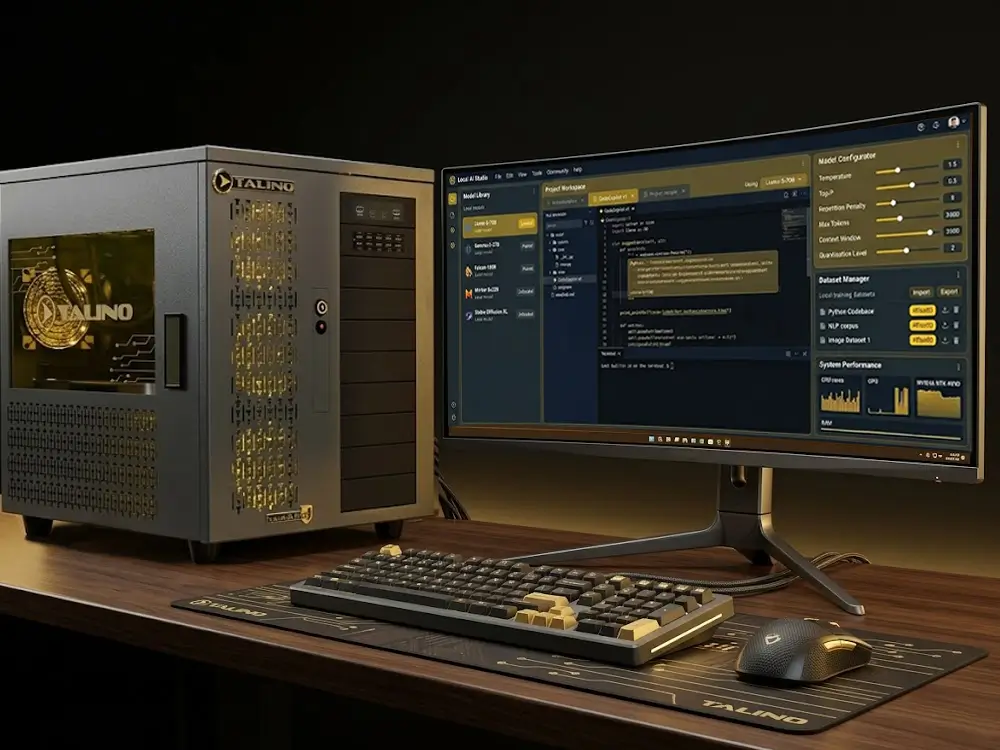
For some agencies, that may be a powerful laptop for field use, triage, and smaller local models.
For others, it may be a high-end forensic workstation with one or more professional GPUs, large memory capacity, fast storage, and room to grow.
For larger organizations, it may be a dedicated AI workstation or server that supports lab-wide workflows and internal AI processing without sending sensitive data outside the organization.
There is no single answer for everyone. That is why custom matters.
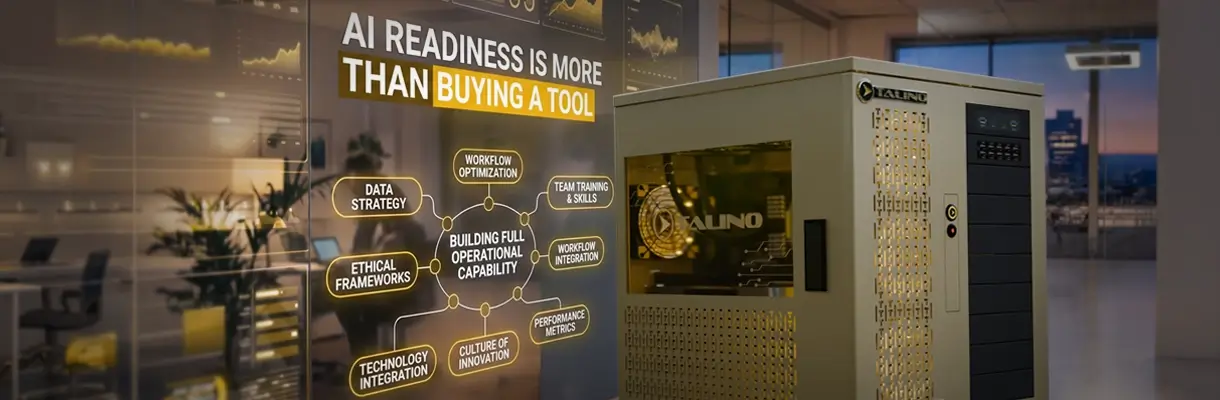
AI readiness is more than buying a tool
Organizations should start thinking about AI readiness as a full operational capability. This includes hardware, software, training, policy, validation, security, support, workflow design, and documentation. The agencies that succeed with AI will not be the ones that simply buy the newest tool. They will be the ones that understand how AI fits into their mission and build the right infrastructure around it.
Before buying or deploying AI, agencies should be asking questions like:
- Can this run locally?
- Can this run offline?
- What hardware does it require?
- How much GPU memory is needed?
- How much RAM and storage will the workflow require?
- Where does the data go?
- Can the output be validated?
- Can the process be documented?
- Can this scale as our data grows?
- Will this system still be useful two or three years from now?
Those are not just IT questions. Those are investigative, forensic, legal, and operational questions.
The takeaway
AI is already becoming part of investigative workflows. That is not the future. That is now. But many organizations are still focused almost entirely on the AI tool itself and not enough on the hardware required to use it properly.
That gap matters:
- If the hardware is underpowered, the tool may not perform.
- If the system is not designed correctly, the workflow may fail.
- If the data has to leave the agency unnecessarily, the risk increases.
- If the deployment is not understood, the results may be harder to defend.
AI can be a powerful force multiplier, but only when it is supported by the right infrastructure.
For law enforcement, military, corporate, and forensic environments, that means thinking beyond software and asking whether the organization is truly ready to run AI in a secure, local, and responsible way.
That is where purpose-built AI workstations and offline model capability become important. And that is where companies like SUMURI and our TALINO team can help.